I've been thinking about you for a while now, and I want to put something in writing because I think it deserves more than a passing conversation. What I'm offering you is half a job and half a welcome — and I want to be honest with you up front that the welcome is the bigger part. The job is real. The pay is real. The work matters. But the reason I'm writing to you, and not posting an ad somewhere, is because of who you are to this family, and because of who I've watched you becoming.
I want to tell you what I'm building, what I want your part in it to be, and what I'm hoping you'll take from it — both immediately, in money and in skills, and over the longer arc, in the kind of man you're already on your way to being. So bear with me through what follows. I've made it look the way I'd want a real offer letter to look, because that's what this is. And I've gone further than a normal offer letter would, because what I want you to see is not just the role but the architecture of the work itself. You're old enough, and sharp enough, to be shown the whole picture. So I'm showing it to you.
Most of what I do has lived under different names over the years. The clinic. The reports. The films. The writing I send people. Music I make late at night. Things I invent and tinker with. The way I show up for the boys and men I work with, and the way I try to show up for the elders in our family — for Uncle Warwick, for Aunty Verna. None of it has ever sat under one roof. They've all been their own thing. And for a long time that suited me, because I was figuring out what they all were.
I've come to a place where I want to name the roof. I want everything I make to sit beneath one identity that says, plainly: this is the body of work, and it has a shape, and you can come into it and be part of it.
The name comes from two places, and they sit on top of each other in a way that matters. The first is a letter — a very short one, in the New Testament — where Paul writes to a man named Philemon, asking him to receive a runaway, Onesimus, back into his house not as property, but as a brother. The whole letter is one quiet act of stewardship: receive him no longer as what the world has labelled him, but as kin. That has been the line running underneath everything I've done, in every domain. The boys in the foster system I write reports for. The men coming through divorce and grief. The elders who are slipping out of being seen. The films and the writing. All of it is one practice, dressed in different clothes — the outer act of stewardship, again and again.
The second Philemon is Jung's. In The Red Book, Jung describes an inner figure who appeared to him during the most difficult years of his life — an old man with the horns of a bull and the wings of a kingfisher, who Jung called Philemon, and who became the personification of his deeper teacher-self. Jung wrote that Philemon brought him things his ego could not have produced — that he was "the one who taught me psychic objectivity, the reality of the psyche." Where Paul's Philemon is the outer act of receiving the other as kin, Jung's Philemon is the inner act of receiving what arises in oneself as teacher rather than threat. The same move, turned in two directions. Both have been there, underneath the work, the whole time.
And then there is the third Philemon, the one closest to home — Leo Philemon. My son carries the name as his middle name, given to him before I had any conscious plan to put it on the work. The name was already living in the family. Naming the larger body of work after it is, in a way, just letting that quiet decision become visible. Philemon Discoveries is the roof. Leo carried the name first.
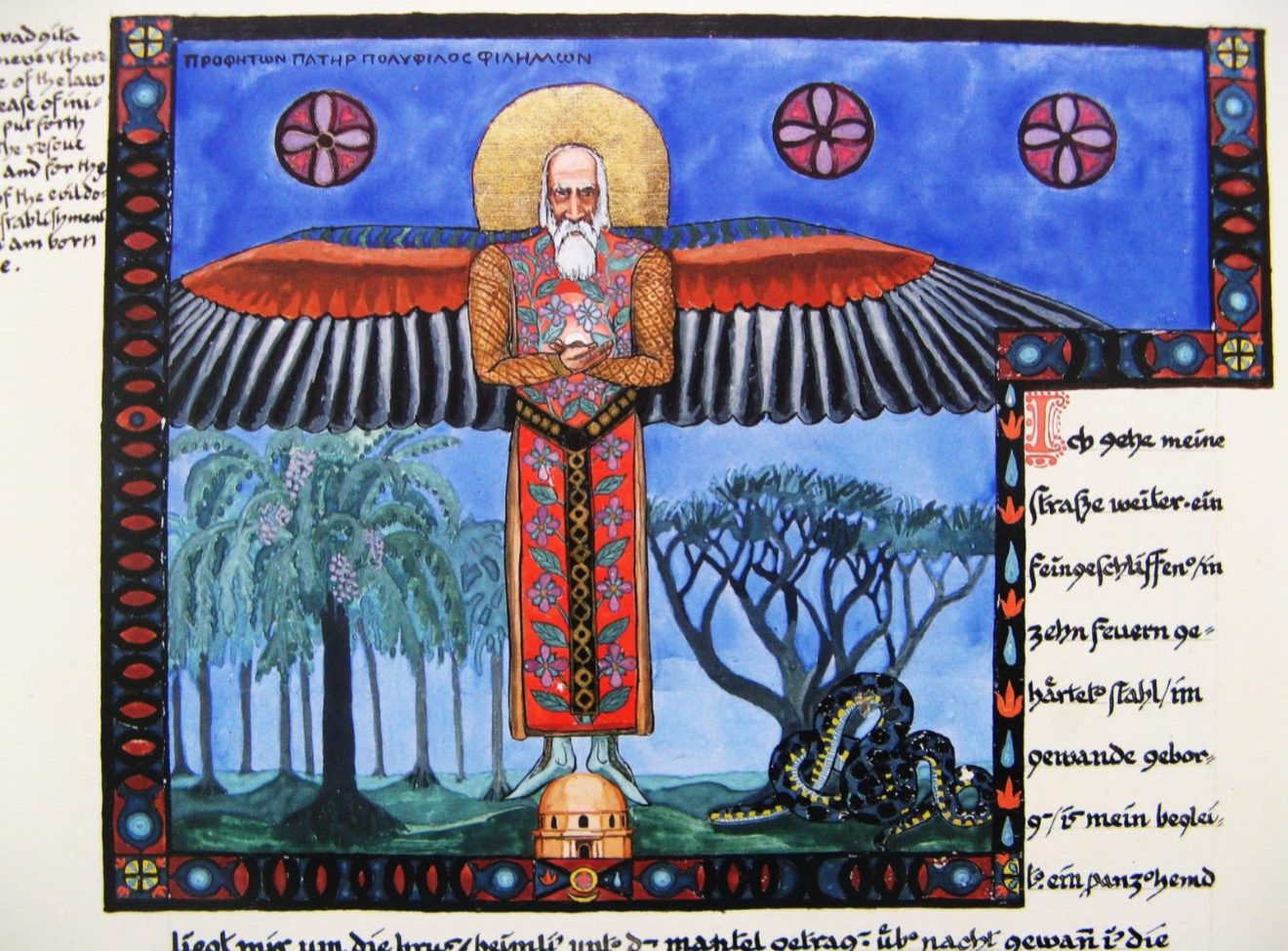
Everything else — Place Psychology, the clinic work, the reports, the music projects, the film stuff, whatever comes next — sits under that roof as one room each. Place is one room. Wolfpack is another. And it's Wolfpack that I want to talk to you about first, because that's the room you're already in, and have been since the day you were born.
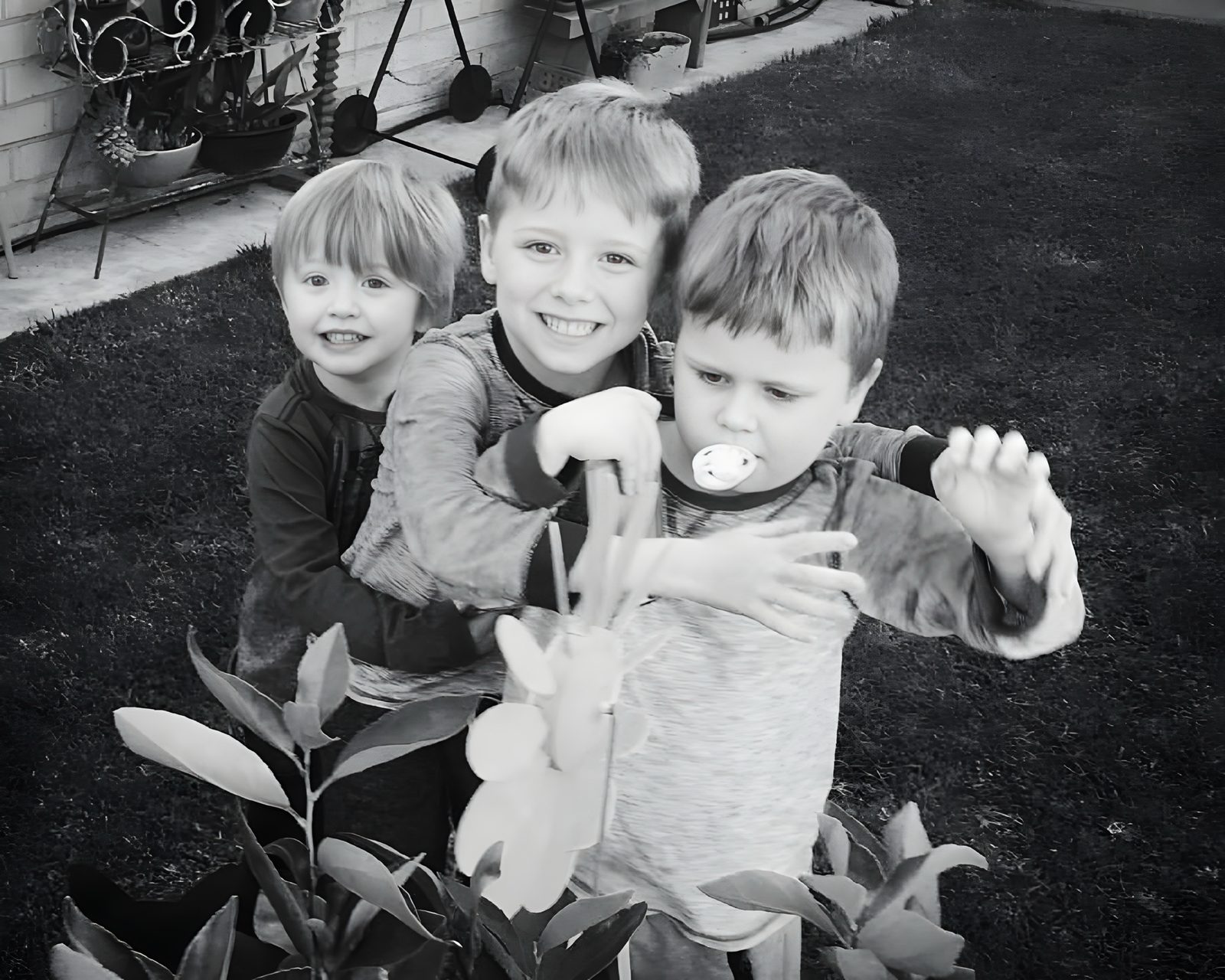
Grant·Jude·Gene
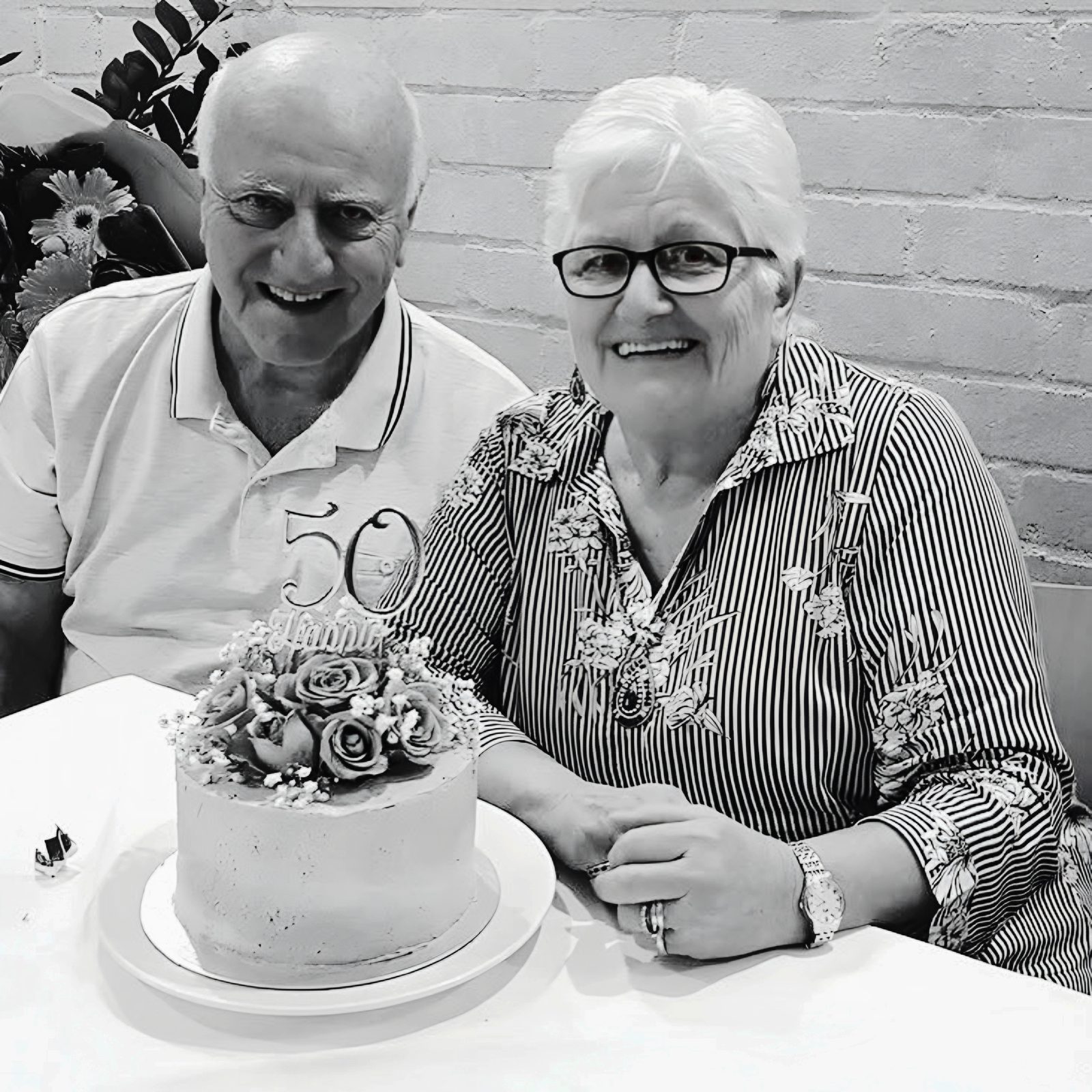
Aunty Verna · GaGa
Wolfpack is older than this letter. Older than the apprenticeship I'm offering you. Older than Philemon Discoveries as a name. It's what I've come to call the small group of us who carry each other across years and through weather — the family that holds, when families are required to hold.
The shape of it: your dad and me, side by side. Grant is my brother — my deepest brother, my best friend, my blood — and the second father at the centre of this pack. We are different in almost every direction a man can be different from another man, and that is the whole point. He is grounded where I am restless, steady where I am wide-ranging, present in ways my work pulls me out of, and quietly funny in ways I never quite learned. He is also, at the same time, exactly as fierce as I am about the people he loves. We are not the same man twice; we are two halves of one bond, and Wolfpack as it stands now exists because the two of us, in our particular shapes, decided to raise our boys side by side. The places we'll go, we'll go because the shape of us together is what makes them reachable.
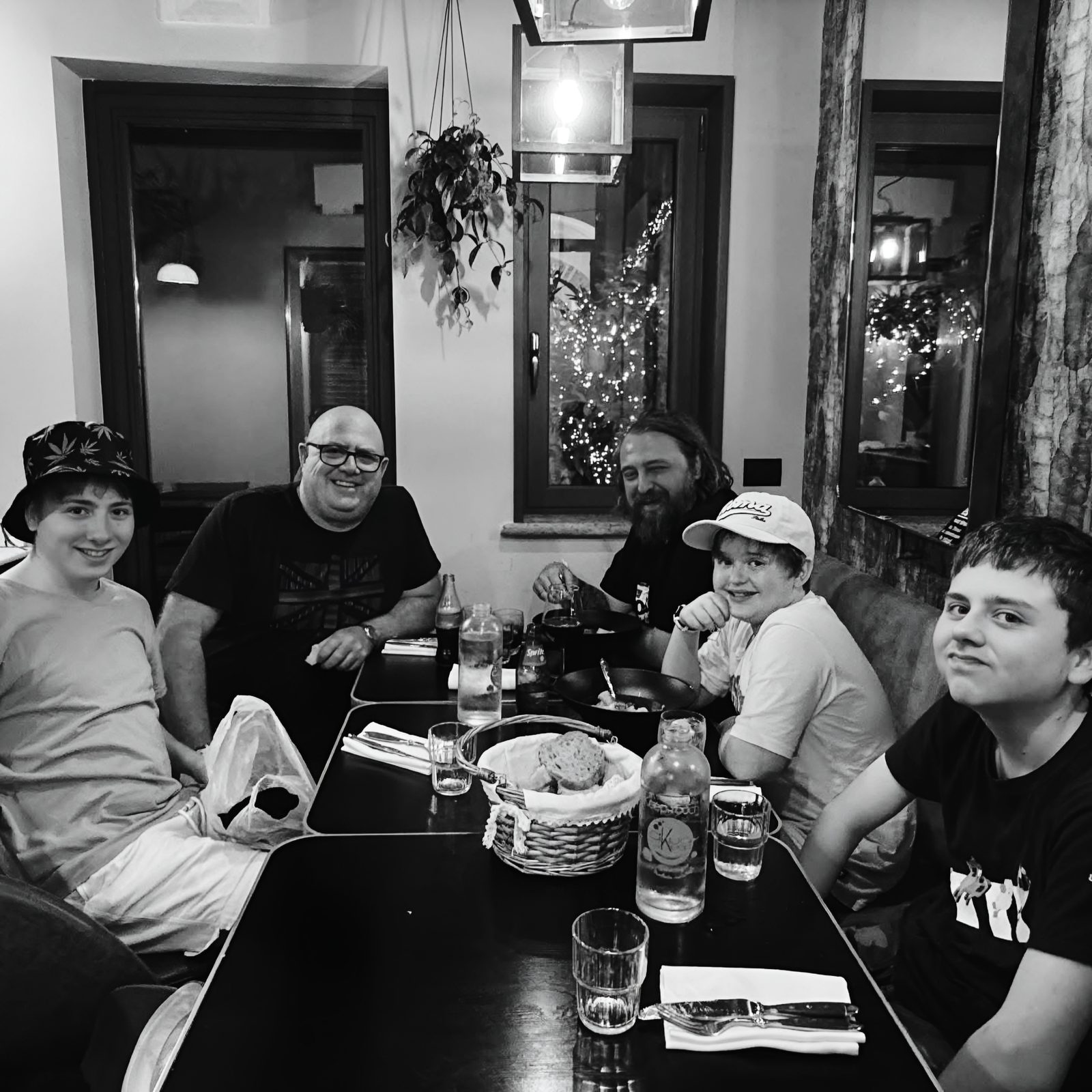
Around us: Uncle Warwick — my father, your great-uncle, the elder of the Fullagar line, the man both Grant and I have learned more from than we usually admit. Aunty Verna at the centre on the Haywood side, who is GaGa to you and Gene and Leo, and Aunty to Grant and me — holding what she has always held, in the way only she does. The few who gather around the rest of us. That's the shape of Wolfpack.
You've been in it since you were born. You don't need this letter to confer that. What this letter does is name a level of passage inside it — the level at which a sixteen-year-old gets met by his uncle as a young man, given real work, real money, real trust, and shown more of what the family work actually is. There are further passages after this one. They'll arrive in their proper time.
What follows is more than a job description. It's the architecture of the work I'm building, written down for you because you're stepping into it, and because the way we do things in this family is not the way most people will do things at your station in life. I want you to see the whole shape, not just your bit of it. Take your time with it. Read it twice. Come back to it when something becomes relevant.
The architecture
of the work.
Before I tell you what you'd actually do, I want to tell you what you'd be inside of. Most jobs don't bother — most jobs aren't built around anything, and the people doing them are not asked to understand the shape of what they're inside. This one is different, and the difference is the whole point.
§ OneThe principles, before anything else
Seven things sit above every operational decision in this work. If you read nothing else, read these. They are the answer to the question "why does this feel different?" — because they are.
You're paid properly, on the books, into your account. A flat rate, generous for sixteen, calibrated to teach you the shape of working life rather than insulate you from it. Money is a vehicle, not the substance.
Wolfpack opens the door warmly. Wolfpack does not wave anyone through. The apprenticeship has to be done well like anyone else's, and the family name raises the bar rather than lowering it. This is one of the things being taught.
Five hours studying a tool at $30/hr is a $150 investment in a future capability of the family work. Learning is the work, when it's the right learning. It is not a perk. It is one of the legitimate ways you bill hours.
The work you'll be given is selected so that getting it wrong has no cost beyond a learning moment. There are no punishments, no friction, no awkwardness. If something fails on the first attempt, that's the design, not a problem.
Year 11 is heavy enough; Year 12 will be heavier. If schoolwork is squeezed, the apprenticeship pauses, no questions asked. Written into the role, not bolted on as a kindness.
The deliverable, in the long run, is not tasks completed. It is a young man whose passage was witnessed and accompanied by an uncle who was for him. The apprenticeship comes with payslips and portfolio work. Wolfpack comes with something else, which doesn't reduce to a sentence.
Anger-and-fear is not in the toolkit and never will be. There is no version of this where you are in trouble with Uncle Luke, no awkwardness at family events because something at work went sideways, no Christmas-table weirdness if you step back. The bond is unconditional and predates the apprenticeship by sixteen years; the apprenticeship is one expression of that bond, not a test of it. If something is hard, the move is toward each other, not away. This is one of the things being modelled, not just one of the things being said.
Gifts & inheritance,
and the difference.
You come to this from a position of having been loved well. You've had a sixteenth birthday on which you were given a car that you love. You've been taken to Europe. The Haywoods on your side, and our side, have shown up for you at every meaningful turn of your young life. None of that is being walked back. None of it should be.
What needs to be named — once, here, and then not laboured — is that those things were love expressed as gift. The apprenticeship is something different. It is love expressed as inheritance, and inheritance has weight.
A gift is given. The recipient receives it, says thank you, and the relationship is complete in the moment of giving. That is good. Families that give well teach their children that they are loved, and you have been taught this thoroughly.
An inheritance is different. An inheritance is offered, and the offer only completes when the recipient takes it up — which means meeting the work of it, the responsibility of it, the standard of it. The same thing offered to two people produces three possible outcomes, and only one of them counts as having inherited.
What is being offered to you here is in the second category. The role, the lore, the way of working, the relationships, the future seat at the table, the place inside the longer arc of Wolfpack and Philemon Discoveries — these are not gifts in the way the car is a gift. They are an inheritance being opened to you, with your uncle as the one who shows you how to receive it. The receiving is the work. The receiving is what the apprenticeship actually is.
§ TwoOn older men & younger men
This section is in the document because the move being made here is older than the document, and worth naming. An uncle taking a nephew into the work is a recognisable shape, and recognising the shape is part of how you're being met.
There is a particular kind of teaching that older men do for younger men, and it's not the same thing as a job, or a course, or a parenting arrangement. It happens at the edge of the work itself — in the long drive to the shoot, in the moment after a meeting when the older man says what he was actually thinking, in the failure that gets quietly absorbed and the small correction that gets quietly given. It's mostly invisible to anyone outside the relationship. It's also one of the most reliable ways human beings have ever found to pass on what is hard to pass on by other means.
I had men like this when I was your age. Not many. The ones I had changed the shape of my life. The work I do now is, in part, the inheritance of what they gave me. Some of it was technique. Most of it was a way of being in the world — how to hold attention, how to speak honestly, how to be present without performance, how to receive other people without flinching. None of that gets transferred in a single conversation. It gets transferred over time, in the work, by being near someone who is doing it.
Two of them are worth naming here, because the line being passed to you runs through them, and because you should know whose place you're stepping into.
The first is your GiGi — Grant's father, my Uncle Gra. To Grant he was Dad. To me he was Uncle, and close — close enough that I lived next door to him, close enough that he was, in every sense that matters in a family like ours, one of the men who raised me. He was an artform of a human being. Lived humbly and honourably. Always smelled a million bucks, always groomed to perfection, always had a cheeky grin available even at a funeral. He was the life of any room he walked into, and he loved us all without fanfare and without conditions. He was, before there was a word for it, the old Wolfpack — the version of this thing that existed before any of us thought to name it. He pulled me out of a swimming pool once, literally, when I was drowning. That sentence is true, and it's also a metaphor for what he did over and over again across the years he was here.
And one more thing about him, because it's the lesson in him I most want you to carry — watch how he loved GaGa. Across decades, in daily practice, with flawless love and respect. He showed her, in every small thing he did, that she was a woman of value, and he did it without ceremony and without ever needing to be praised for it. A man learns how to love a woman worthy of him by watching another man do it well, and Gra did it as well as I have ever seen it done. GaGa is one of the most exceptional women in our family's history, and Gra met her with a daily devotion that matched what she was — that recognised what she was, and honoured it. If, when your time comes, you find yourself loved by someone of that calibre, what you'll need to know about how to receive her, how to keep showing up, how to honour what she is — a great deal of it is already in your bones because you grew up in a family where Gra showed Grant and me how it's done. He is gone now, and there is a Gra-shaped hole in all of us that you learn to live around but never replace. He is, in this letter, the model. The archetype. The uncle who is not Dad but who is close, and who shows up, and who teaches by being.
The second is your great-grandfather Fred — Warwick's father, my grandfather, your father's grandfather, the man whose stories shape the older end of our family memory. You wouldn't remember him directly, but you carry his line. The ultimate cad, a true old timer, another exemplar in the same lineage. The stories of him have been carried down in our family because what he was is worth carrying. Lineage is partly the people you knew and partly the people whose patterns you inherit through the ones who knew them. You are inside both kinds at once.
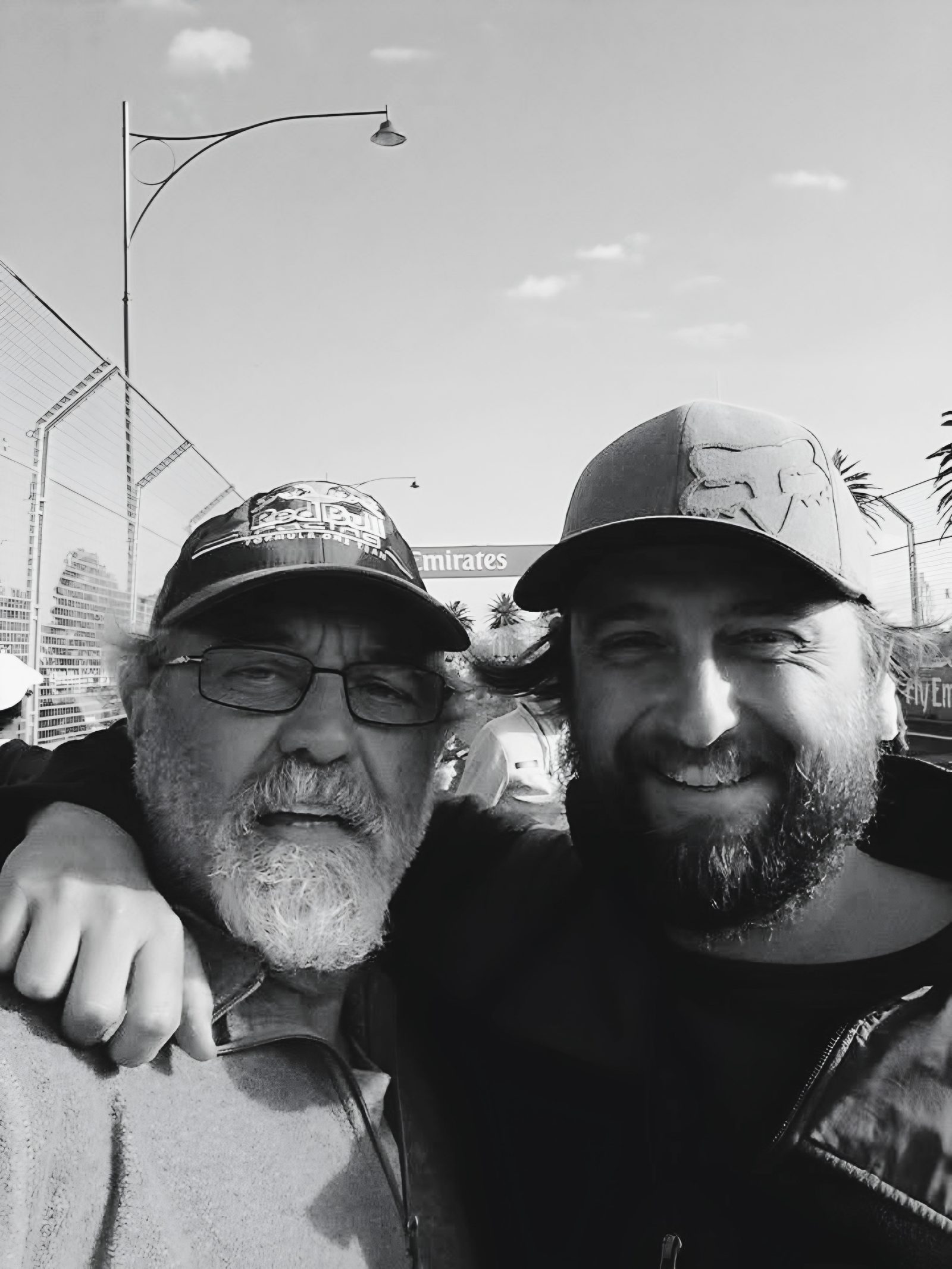
What is being offered to you here is a season of what those men gave me, turned now in your direction. The apprenticeship is the visible structure; the older-man-to-younger-man transmission is the actual current running underneath it. The work is the medium. The medium is also the message.
The line of this in our family runs Fred — Gra — Uncle Warwick — your dad and me — you. We hold this generation of it together, Grant and I, side by side, in our different shapes. He has been doing this for you, in his shape, since the day you were born; what's offered here in writing is the formal uncle-side of the same continuous work. The line runs forward to Leo and Gene when their time comes. It is not a hierarchy in the usual sense; it is a sequence of people who agreed to carry each other. Wolfpack is the name for the agreement. The apprenticeship is one of the ways you step into your place in the sequence.
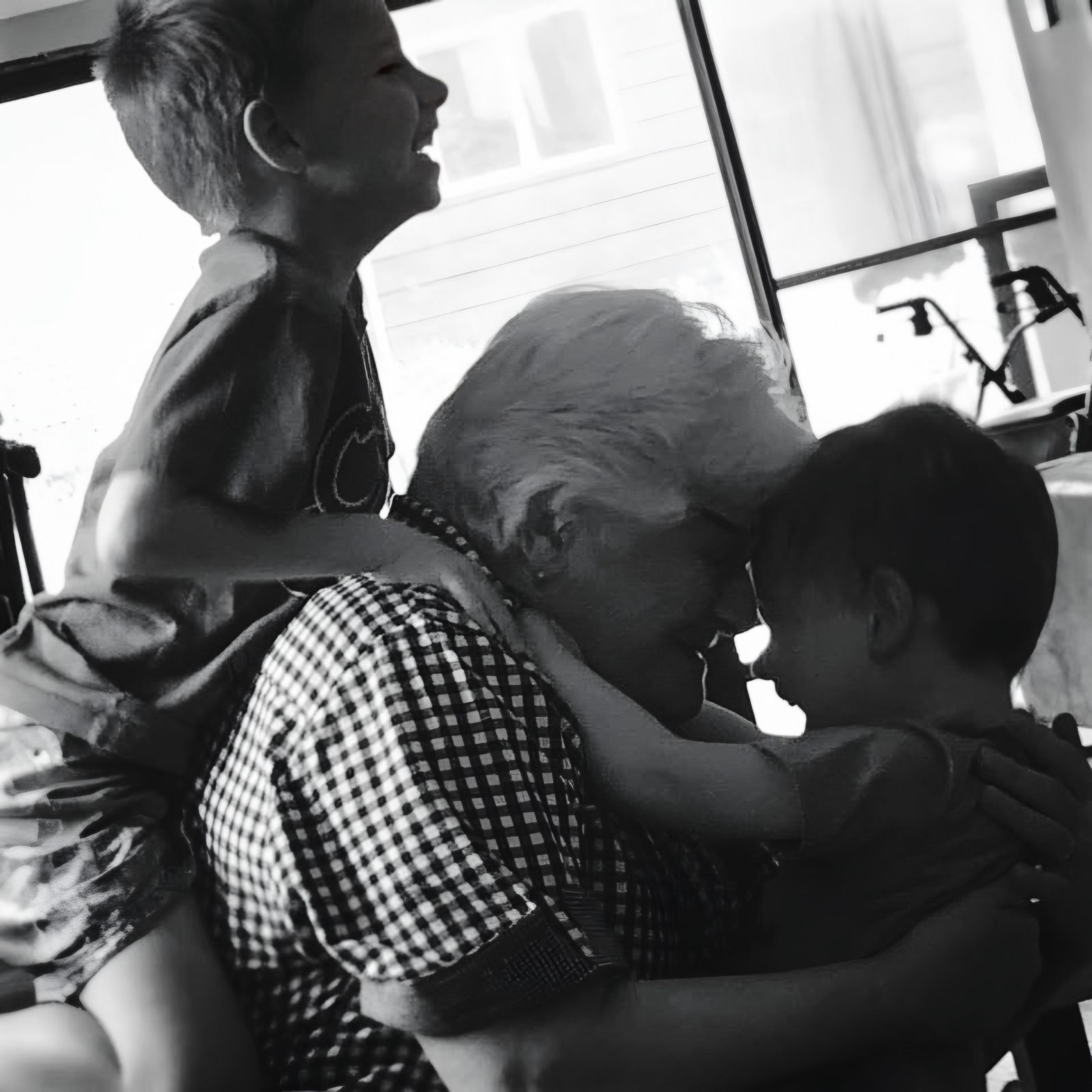
And here is the thing that matters most, and that I want you to feel even if you don't yet have words for it: up until now, you have been held by this lineage as a boy is held — received, witnessed, kept safe, loved into shape by men who had been loved into shape themselves. What is beginning, with this apprenticeship and with the years that follow it, is the slow turn from being held to holding. Not all at once. Progressively. You will start to carry the flame these men carried, alongside the rest of us, and one day on your own, and one day for younger men of your own. Gra carried it for your dad and me both. Warwick carries it still. Your dad and I carry it now, side by side. You are at the hinge. The first stage of the transition into being one of the men who holds rather than only being held.
I spent my whole time listening to older guys
To figure which way to go
Whether to hang my guitar high or low
The way to drag your smoke
'Cause they look justified when drinking
As if they earned each swig and shot
Whether the day's best worth remembering
Or the ones best left forgot
I just don't take advice that's been passed around
Unless it's been beaten 'round
Well, I could lash them back in the rain
All forgotten about
So I'm taking all my cues from the
From the older guys
Yeah, from the
From the older guys
Now old Ted used to do a good stand
Lord, and bowl a good leg cut
Sometimes I wish he was still around
To clip me when I'm messing up
He used to sit out on the back porch
All cardigan and frown
Drinking longnecks of D.E.A
While the Kalgoorlie sun was coming down
I'm taking all my cues from the
From the older guys
From the
From the older guys, oh yeah
Yeah, I was standing outside my local on a
On a cold old Anzac day
And I just couldn't give a tinker's cuss if I
If I drowned out in the rain
And she looked through me like a sheet of glass
Like the, like the first window in her house
One that ain't been lived through
And one that ain't been, been torn down
'Cause even though I, I steal the suits
And I walk like I'm 55 sometimes
I just ain't had the knocks
To sit with the older guys
Yeah, I'm taking all my cues from the
From the older guys
Yeah, from the
From the older guys
I'm taking it all down
From the older guys
This is the section you'll come back to when you're twenty-three. It's here for that reason. You don't need to fully receive it now — only to have it in your hand.
§ ThreeThe arc — what this looks like over time
So you can see the longer view. What's active sits in the current phase. The later phases are aspirational, not promised. They are written down so you can see where this could go.
2–4 hrs / wk
4–6 hrs / wk
10–15 hrs holidays
4–6 in term
0–3 hrs / wk
+ continuing stipend
negotiated
Tumble outta bed
And I stumble to the kitchen
Pour myself a cup of ambition
And yawn and stretch
And try to come to life
Jump in the shower
And the blood starts pumpin'
Out on the street
The traffic starts jumpin'
The folks like me on the job from 9 to 5
Workin' 9 to 5,
What a way to make a livin'
Barely gettin' by
It's all takin' and no givin'
They just use your mind
And they never give you credit
It's enough to drive you crazy
If you let it
9 to 5, for service and devotion
You would think that I
Would deserve a fair promotion
Want to move ahead
But the boss won't seem to let me
I swear sometimes that man is out to get me
They let you dream
Just to watch 'em shatter
You're just a step
On the boss-man's ladder
But you got dreams
He'll never take away
You're in the same boat
With a lot of your friends
Waitin' for the day your ship'll come in
'N' the tide's gonna turn
And it's all gonna roll your way
Workin' 9 to 5
What a way to make a livin'
Barely gettin' by
It's all takin' and no givin'
They just use your mind
And you never get the credit
It's enough to drive you crazy
If you let it
9 to 5, yeah
They got you where they want you
There's a better life
And you think about it, don't you?
It's a rich man's game
No matter what they call it
And you spend your life
Puttin' money in his wallet
9 to 5, whoa
What a way to make a livin'
Barely gettin' by
It's all takin' and no givin'
They just use your mind
And they never give you credit
It's enough to drive you crazy
If you let it
9 to 5, yeah
They got you where they want you
There's a better life
And you dream about it, don't you?
It's a rich man's game
No matter what they call it
And you spend your life
Puttin' money in his wallet
Working 9 to 5
What you'd actually
be doing.
§ FourThe role, in plain terms
§ FiveThe four threads of the work
Three creative tracks running in parallel from week one, plus a steady fourth thread of light PA work underneath. Light touch on each at the start; depth grows over time at your pace. The tracks reinforce each other — Claude is the thinking partner that supports the Framer and cinema work; Framer is the public expression of the bigger project; cinema is both a documentary practice and the visual material the website eventually holds. Running all three from the start is deliberate. It mirrors the way the senior work itself runs.
Claude is the substrate you'll work on top of for everything else, and fluency here compounds across every other track. Not because it's most important, but because everything else gets easier once it's in place.
You'll learn Framer not abstractly but on a real project that's shipping in stages: a quiet v1 in May, a living v2 across late 2026, and an immersive v3 in 2027. The strategic documents for the site are explicit that v3 is too big for one person learning Framer alone — and that 'a collaborator (your nephew, in time)' is the named on-ramp. That's you. The seat is being kept warm.
This track applies the existing five-stage progression from the Hollywood guide to a real apprentice with a real role. You'll learn the craft on small things first — VHS Camcorder app, CapCut edits — then graduate to log footage, DaVinci Resolve, film emulation, and from there into running ingestion and grading on actual projects.
The legible, finishable work that builds the habit of professional discipline. Calendar tidying, drafting non-clinical correspondence for me to review before sending, filing and organising, research tasks, the occasional logical errand. Roughly thirty to sixty minutes each working session, then graduate to creative-track work.
Boring tasks first, exciting tasks second — the opposite of how you'll be tempted to schedule it. The discipline of starting with the small steady work is part of what's being taught. Most of working life is this; learning to do it well, and quickly, gives you the freedom to do the larger creative work the rest of the time.
§ SixThe Wolfpack Chronicle
This is given its own section because it's the cleanest, most structured workflow you'd own end-to-end, and because it sits at the intersection of family and craft in exactly the way this whole apprenticeship is meant to.
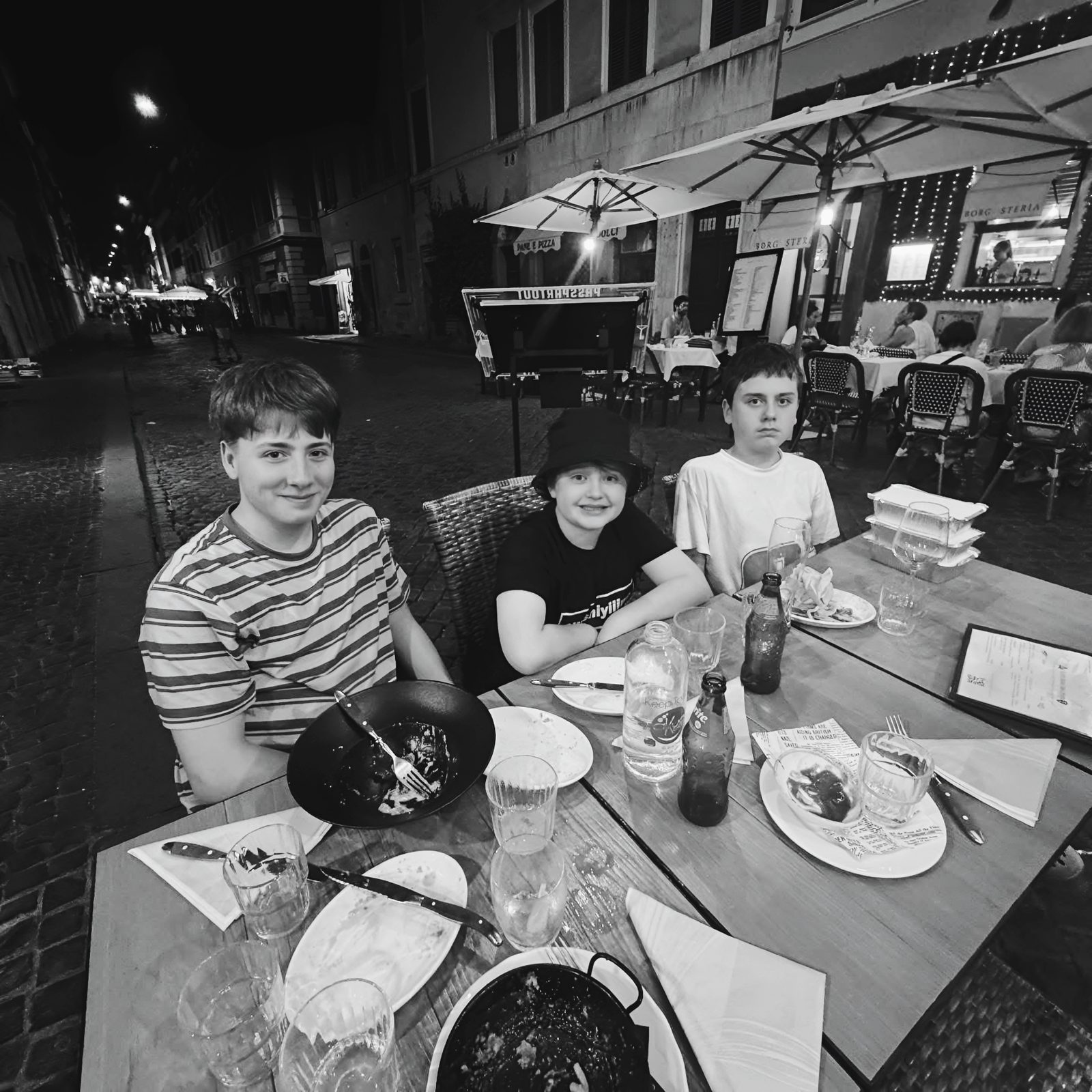
Family-side. Wolfpack-side. Not a Philemon Discoveries project. The deliberate spatial-and-flat documentation of the pack across the year — Leo, you, Gene, Uncle Warwick, GaGa, your dad and me, the gatherings, the small moments. Captured deliberately on the cinema kit when it's available, on phones the rest of the time. The strategic logic is simple: a window is closing on a particular age of all the boys at once, and the difference between casual capture and deliberate capture, viewed in twenty years, will be the difference between having photos and having a record. The pack documenting itself is the practice.
It belongs to the family. It uses cinema kit and methods, but its purpose is for us, and it is owned by Wolfpack.
The cadence
Weekly deliberate session. Five to ten minutes of one of the boys, or a small gathering, doing whatever's actually happening. No script, no production. Spatial if the kit is in hand; phone otherwise.
Monthly formal portrait. Considered framing, lighting, a question asked on camera, the answer recorded. The kind of thing that becomes the spine of an archive.
Opportunistic capture. Phone always one tap away for the moments that can't be predicted.
The Polaroid Lab loop. One frame per week pulled from the footage, lightly graded, printed, added to the staircase wall.
What you'd do
Camera and audio setup for the weekly and monthly sessions — tripod, framing, lighting check, microphone armed. File ingestion immediately after — card off-load to two SSDs, structured into the archive's named folders. Metadata: tagging clips by location, date, who was there, what was happening. Frame selects for the weekly Polaroid: pulling three or four candidates, grading them lightly, running the chosen one through the printer. A monthly assembly cut — two or three minutes the family can watch on Vision Pro or flat TV.
What I'd do
Operate the camera during sessions. Conduct on-camera conversations. Approve selects before they're printed. Hold the longer-form shape of the archive — what it eventually becomes for all of you when you're older. The artefact itself is between us and the family; you're helping run the workflow that produces it.
Three things compound. First, you're doing real, useful work for a family you care about — Wolfpack closeness made visible in craft. Second, the workflow is a perfect training ground for the Ideal Nurture documentary work that comes later. Same kit, same disciplines, lower stakes. Third, when the documentary is being assembled in 2027 and I need someone alongside me on it, you'll have a year of spatial-and-flat capture experience already in your hands. The Chronicle is not a project tacked on. It's your apprenticeship workshop, and one of the ways Wolfpack work feels different from Philemon work.
§ SevenWhat you'd touch, and what you wouldn't
Trust is the foundation of this whole arrangement, and the cleanest way to honour it is to be precise about what's in scope and what isn't. There's no awkwardness here — these are sensible boundaries that protect you, the practice, and everyone we work for. They're written down rather than hinted at, because written-down is more respectful than unspoken.
- Your own Microsoft 365 account on the practice domain
- Your own Claude account, paid for
- Your own Framer account
- DaVinci Resolve and the cinema software stack
- Your own 1Password vaults
- Practice non-clinical SharePoint areas, scoped per-task
- The Ideal Nurture project drives, scoped to current work
- The Wolfpack drive for the Chronicle workflow
- The bespoke hotspot for non-home-network work
- Any system with identified client information — Halaxy, clinical mailboxes, Medicare
- Practice banking, in any role
- Legal or expert-witness systems and files
- Investor materials, cap table, financial structure
- My personal Apple ID, vaults, email, banking
- The household main network or anything connected to my private infrastructure
- Bianca's admin areas, Global Admin, the domain registrar
- The spatial documentary edit master or anything investor-facing
You'd also get the social-engineering brief, told plainly and once: someone may at some point try to phish you because you're connected to me. The rule is simple — if it's unusual, you stop and ask me on Signal or in person. There are no consequences for false alarms; reporting anything weird is rewarded.
And more broadly than the technical stuff — because the technical stuff is just a specific case of a larger principle — things will go wrong from time to time. Files will be lost. Mistakes will be made. Something will get broken or sent to the wrong person or fall through a crack. That is how working life actually works, even at the senior end of it. When it happens, the move is the same as with the phishing rule: yell loud and fast. Tell me immediately. We'll fix it together. I would rather know about a problem at five in the morning than discover it at ten because you tried to handle it alone and the silence cost us a day. There is no version of this where you are in trouble for telling me something has gone wrong. The opposite, in fact — telling me fast is the thing I will most appreciate about how you work.
You should know, plainly, what kind of working relationship this is, because it's not the kind most people have at your age — or, frankly, at any age. You will never be disrespected by me. Not in this work, not in our family, not in any room I'm in with you. The love I have for you is the kind that holds the other person up, not the kind that uses fear or contempt or sharpness to get a result. I've spent a long working life around people who run on the harsher animal registers — the kind who manage by shame, who motivate by punishment, who keep the people around them small so they themselves can stay big. I have learned a great deal from being near them, and almost all of what I learned is what not to do.
One of the things I most want for you and the boys — for you, for Leo, for Gene — is that you start a rung higher than that. That you don't grow up thinking the way some men work is the way work has to be. That you find out, early, that there is a noble register available, where the work gets done seriously and the person doing it gets treated with care, both at once. This is, honestly, the biggest perk of the whole arrangement. The pay is real. The skills are real. But what you'll learn from being inside a working relationship that runs on stewardship rather than fear — that's the part you'll carry into every job, every friendship, every room you walk into, for the rest of your life.
I need a god damn job
I need a god damn job
I really need a god damn job
I need a god damn job
God dammit
God dammit
God damn
I need a god damn job
I need a god damn girl
I need a god damn girl
I really need a god damn girl
I need a god damn girl
God dammit
God dammit
God damn
I need a god damn job
Right now, right now
An honest job
If I can find one
§ EightPay, hours, and how time gets logged
The rate
A flat A$30 per hour, across every kind of work, including paid learning hours. Generous for sixteen, deliberately not extravagant — and the reason for that is not stinginess. It's because the extravagant stuff is what gifts are for, and gifts are a separate channel that runs continuously alongside this and isn't going anywhere. You know me. Off the clock, when we're not being formal in a document like this, I am the "of course we fucking can" guy — the uncle who turns up on a Tuesday and says we're doing the wild thing, then actually makes it happen. That tap doesn't turn off, and it's not going to.
It's part of why I am, structurally, the yin to your dad's yang in this family. Grant builds the steady ground that everything stands on; I'm the one who shows up with the bold idea on top of it. Both are essential. Both are what Wolfpack actually is, in motion. You get to be apprenticed near both, which is one of the rarer gifts of where you're standing.
So: pay is one thing. Gifts are another. Both real, both continuing, neither replacing the other. The pay is about recognition and respect for the work you do; the gifts are about love expressed in the way our family loves. The wider context is what matters: this is a family business you're being apprenticed into, with the prospect of more substantial recognition later as your contribution matures and as the work itself grows. Money is a vehicle for the apprenticeship, not the substance of it. Take it seriously, spend some of it foolishly, save some of it sensibly, and don't let any of it confuse you about why we're doing this.
What hours count
All of the following are billable at the same rate: direct project work; paid learning (curated tutorials, reading, working through stages); sit-down sessions with me; workflow execution like running the Chronicle ingestion. You log hours honestly in a simple weekly sheet I'll give you. The honour-system is the system; trust is the foundation. If there's ever any doubt about whether something counts, it counts and we sort it later.
Hours caps, by phase
Phase 1–2: two to six hours per week during school terms, around school not over school. Phase 3 (holidays): up to ten or fifteen hours per week if you want and your dad agrees, with at least one full day off. Phase 4 (Year 12): hours go down to zero-to-three per week, but income does not — see below. No work on school nights past 9pm. No work that displaces sleep. I enforce this even if you want to push on.
The Philemon Discoveries Education Stipend
Most workplaces, when an employee's external life heats up, reduce hours and reduce pay in lockstep. We don't. In Year 12, when the HSC is the most important work in your life, Philemon Discoveries continues to pay you at a meaningful ongoing rate even though your apprenticeship hours go right down. Call it a stipend, call it a retainer, call it what you like — what it is, in plain terms, is the family business investing in your education as part of the apprenticeship rather than treating school as a competitor to it.
Mechanically: the exact figure we'll set together when we get closer to it, but it'll be calibrated as a real ongoing income, not a token. Enough that you can keep doing the things money lets a young person do — running the car, buying the textbooks, taking your friends out, having the small dignities — without being pulled away from study by needing to pick up shifts elsewhere. Enough that it materially supports you doing the HSC well. The light apprenticeship work that does continue — a few hours a week of paid learning, perhaps the lighter Claude side, perhaps the occasional small project — is paid at the normal rate on top of the stipend.
And while we're being honest — school has not been a fair place for you. I know what's been thrown at you across these years. I know what you've quietly carried home and what you've had to walk back into the next morning. None of us in the family have missed it, even when we haven't always known the right thing to say. And before I tell you what I want for the year ahead, I want to leave a little room in this letter for the actual feeling of it, because pretending otherwise would be patronising. So: there's space in here for this too.
They laugh in the middle
Of my speech
Swingin' in the hall
Out of reach
Learning learning who can take
Talk talk talk talk talk
Fuck school, fuck school, fuck my school
Fuck school, fuck school, fuck my school
Fuck school, fuck school, fuck my school
Future's in wood shop, right!
To a law job, night school
Miss the bus to stay you
Miss the bus to stay you
Miss the bus Tuesday
Miss the bus to stay cool
Laugh in the middle
Of my speech
Swingin' in the hall
Out of reach
Teacher — what a bitch
Fuck my school
Fuck my school
Fuck my school
Whatsamatter, buddy?
Fuck you
OK. That's allowed. That's real. And here's the part that comes after it.
One of the marks of a dignified and refined man is respect for education. Not as a hoop. Not as a competing claim on time that has to be defended. As a real and serious form of work in its own right — the work of becoming someone with the intellectual furnishings to live a deep life. The way most workplaces treat school is as an inconvenience that the employee has to manage around the job. The way our family treats it, going forward, is the opposite: school is one of the things the family invests in you to do well.
You'll meet plenty of bright young people in your life who had to choose between earning enough to live and studying enough to be the people they wanted to become. That false choice is one of the quieter cruelties of modern life. Removing it for you, in the year when it matters most, is one of the ways Philemon Discoveries puts its money where its values are. Take it. Honour it by studying seriously. That's the deal.
And here is the thing I most want for you in HSC year, beyond the stipend itself: I want you to walk out of that place with your head up. Not because you owe it anything — you don't — but because you owe yourself a finish that feels like one. The kids who made it hard for you don't get the last word on what you become; you get the last word, by leaving with your work done and your future started. The stipend is one of the ways the family helps you do that. The rest is yours.
I know this guy
If I'm the mayonnaise he's the cream
Some sit and wait for the ride
While others become the scene
And he can see a Wednesday morning
Like others see Friday night
It's all an open book
It's just how you vandalise
A double stitch on the shirttail
While the rest of us split on the seams
He talks about Art Blakey
And I pretend to know what he means
So now it's three gigs a night
While your girl digs up the UAE
And burn up like a matchstick
The whole damn city can see
The sun caught me hiding
Just enough for someone to see
My heart in my hands, the tracks of my glands
Cracking through the grit in my teeth
So when did you decide
That there's only so much you can lose?
The best choices come
Just when there's nothing left to choose
So you blow up letterboxes and chlorine bombs
'Cause it's a weekend blitz on the dicks who just can't whistle the tune
Yeah and yeah hit while I sit here on my hands
Measuring compliments with a spoon
And I'm never too far away
I know this guy
If I'm the mayonnaise he's the cream
Some sit and wait for the ride
While others become the scene
And he can see a Wednesday morning
Like others see Friday night
It's all an open book
It's just how you vandalise

If at any point school, life, mental health, or family circumstances mean you need to step back, you say so and the work pauses. No notice period. No reduction in standing. No awkwardness. The role resumes when you're ready, with whatever adjustments make sense at the time. This is in writing in the covenant your dad and I sign, so all three parties have agreed to it.
Reviewable phases, not performance reviews
At the end of each phase we have a sit-down — informal, generous, honest. What worked. What didn't. What you want to do next. What's too much. I write a one-paragraph note after each one and save it. This is the equivalent of a performance review, but it's not framed that way: it's a check-in between an uncle and his nephew about how the apprenticeship is going.
§ NineThe family boundary, in operational terms
Wolfpack is the inner circle. The apprenticeship is professional. The two coexist; they need to be visibly distinct in the moments where they touch.
Decisions get made on the work merits. Feedback gets given honestly. The standard is the standard.
We're not talking shop at family dinners by default. The family time is the family time.
If the two roles ever conflict, I name the role I'm speaking from. "This is the principal hat: here's the feedback. Now, putting it back on as the uncle: are you all right?" Sounds awkward written down; in practice it's a useful explicit habit.
Confidentiality, both directions
Anything you see or work on at the practice or on the bigger projects doesn't get discussed at family events, with cousins, with friends, or with your dad beyond what we've agreed. Anything I tell you in the work context that's sensitive — a business decision, a frustration, an investor name, a strategic concern — is held confidentially by you. You're being trusted at an adult level here. That's the deal, and I'm telling you so explicitly.
On personal things you tell me — this one is more nuanced, and it's important. You'll have moments, probably, where you want to talk to me about something in your own life that you wouldn't open immediately with your dad — a thought you're trying out, a question about how to handle something, a thing you're working through. That's one of the proper functions of an uncle, and the door is open for that. What I want you to understand about how it works in this family is the following: I am not a secret-keeper from your dad, because Wolfpack doesn't work that way. Your dad and I are patriarch-brothers, blood-bonded, and the structural integrity of how we hold you and Gene and Leo depends on us not being divided about you behind your back or behind each other's backs. The opposite of that, though, is not me running and reporting — it's a kind of conscious unity where Grant and I operate from the same picture even when we're each having different conversations with you in our different roles.
What this means in practice: things you tell me are held by the patriarch unit, which is your dad and me together, with the discipline appropriate to that holding. They are not broadcast. They are not gossiped about. They are not used against you ever, in any direction. They are not necessarily relayed verbatim to your dad — sometimes I'll tell him directly, sometimes I'll tell him I've spoken to you and leave the substance to you, sometimes I'll hold something quietly because it's not yet his to know and I trust my judgement on the timing of that. But your dad is never outside the holding. He is the other half of the men who hold you. And the same goes the other direction: if your dad ever tells me something about you — a concern, an observation, a thing he's noticed — that is also held by the unit, and I don't run to you with "your dad said this about you." The unity protects everyone's dignity, in every direction.
And while we're being clear about how this works — this is the standing practice for everyone in Wolfpack, not a bespoke arrangement just for you. The same discipline applies to Leo. Your dad and I hold information about him with the same care and the same unity, in his case with me as the father and Grant as the uncle on the other side. The same goes for Gene as he grows further into his own life. The same went, and goes, for your great-uncle Warwick — when his life touches anything we're holding, we hold it under the same rules. I want this for all of you. I want it for Leo and for my dad as much as I want it for you. The reason it's worth writing down to you specifically is because you're sixteen now and old enough to see it, and because part of what you're being apprenticed into is, eventually, becoming one of the men who holds this discipline. When you're older and Leo or Gene comes to you the way you might come to me, you'll do this for them. That's part of the inheritance.
The narrow exception, which exists in any relationship of this kind: there is a small band of cases — to do with safety, real risk, things that cross a line — where I'm professionally and ethically obliged to act, including telling whoever needs to know. That band exists; I'll never use it lightly; and if the moment ever comes where I have to use it, you'll know it's because something has reached a level where holding it quietly would be wrong. And — this matters — you would never, ever, find out as a careless afterthought. This is the break-glass-in-emergency stuff that may never happen, but has to be labelled because honesty requires it. If those rare moments ever do arise, you will be centred in whatever happens, not informed at the edge of it. Your welfare and your dignity will trump everything else, including the protocol itself. You will be told before, not after; you will be in the room, not outside it; you will not be processed, you will be held. That is the only way I would ever do that work. Otherwise, what we say stays inside the men who love you.
What I'm promising you
You'll learn how a working body of creative and professional practice actually runs from the inside — not the polished version on a website, but the real one. The drafts, the wrong turns, the saves, the small wins.
You'll get a CV that says something other than "casual at a café" — a legitimate, paid, family-business apprenticeship across writing, film, music, tech, and helping work, with a real reference at the end of it.
You'll get my honest attention. If something's hard, we work it out. If you want to learn a specific thing, I'll teach you or find someone who can. If you decide it's not for you, you can step out clean — no awkwardness, no Christmas-table weirdness. That's the family-first part of this. It's not negotiable.
§ TenWhat I'm asking of you
Show up. Tell me when you can't. Do what you say you'll do, and if something falls over, tell me before it falls so we can catch it together. Treat anything you see in the work as confidential — clients, creative projects, family stuff — same rule for all of it. Bring your own thinking. Disagree with me when you think I'm wrong. And take it seriously, because I am.
That's it. The rest we'll figure out as we go.
On a crowded beach in a distant time
At the height of summer see a boy of five
At the water's edge so nimble and free
Jumping over the ripples looking way out to sea
Now a man comes up from amongst the throng
Takes the young boy's hand and his hand is strong
And the child feels safe, yeah the child feels brave
As he's carried in those arms up and over the waves
Deeper water, deeper water,
Deeper water, calling him on
Let's move forward now and the child's seventeen
With a girl in the back seat tugging at his jeans
And she knows what she wants, she guides with her hand
As a voice cries inside him — I'm a man, I'm a man!
Deeper water, deeper water,
Deeper water, calling him on
Now the man meets a woman unlike all the rest
He doesn't know it yet but he's out of his depth
And he thinks he can run, it's a matter of pride
But he keeps coming back like a cork on the tide
Well the years hurry by and the woman loves the man
Then one night in the dark she grabs hold of his hand
Says 'There, can you feel it kicking inside!'
And the man gets a shiver right up and down his spine
Deeper water, deeper water,
Deeper water, calling him on
So the clock moves around and the child is a joy
But Death doesn't care just who it destroys
Now the woman gets sick, thins down to the bone
She says 'Where I'm going next, I'm going alone'
Deeper water, deeper water
On a distant beach lonely and wild
At a later time see a man and a child
And the man takes the child up into his arms
Takes her over the breakers
To where the water is calm
Deeper water, deeper water,
Deeper water, calling them on
The reason I want you in particular, Jude, is not because I need a PA — I could find one. It's because there's a kind of person you're becoming, and I've watched it from across the room for a while now, and I think a season inside this kind of work, with someone who's family and who has nothing to prove to you, will be useful to you in ways neither of us can fully see yet.
If you say yes, we'll have a proper sit-down — you, me, your dad if you want — and we'll lock in the practical pieces. Hours, rate, first projects, how we'll talk to each other when something's not working. If you say no, or not now, that's also a complete and valid answer, and it changes nothing between us. I'll still be the same uncle. The door stays open if you change your mind later.
Either way, take some time with this. Don't answer in the first five minutes. Read it again tomorrow morning when you're a bit clearer-headed than you are right now. Then tell me what you think.
Whatever comes of the work itself — whether you stay in for a season or for a decade, whether the apprenticeship becomes the thing or becomes a chapter inside a larger thing — the bond is older than the work and outlasts it.
I am your uncle. Blood. Wolfpack. Forever. That is the part that does not move. The work is what gets done in the warmth of that, not what produces it.
You are loved. You are wanted in this. And whatever you decide, I am for you.